A thermal semiconductor.
MetaTherm is a passive, solid-state material that directs heat instead of merely resisting it. The same control principle that lets a semiconductor steer electrons, applied to heat: no power, no fluids, no moving parts.
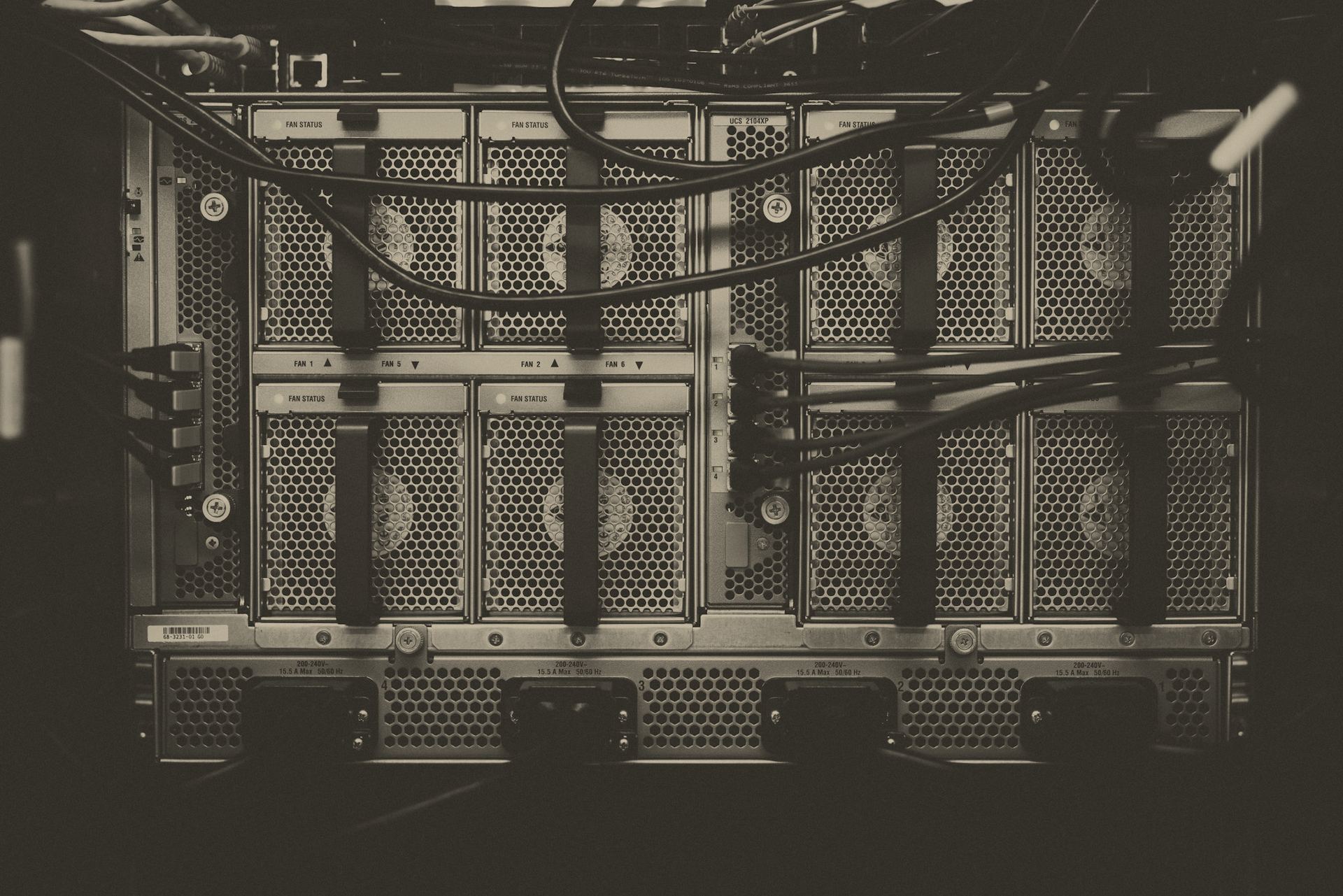
Heat moves the way the medium allows.
Every existing approach to thermal management does one of two things. Insulation resists heat in every direction equally. Liquid cooling removes it by pumping fluid through the hardware. Neither steers it. Heat travels down the gradient until something absorbs or extracts it, and the only handles an engineer has are bulk material choice and mechanical flow rate.
At the scale modern compute now runs, with one kilowatt at the package and well past one hundred kilowatts at the rack, those two handles run out of room. Roughly 40% of every facility's electricity already goes to active cooling.[17] A few degrees of surface rise on the die throttle a generation of accelerator performance. The cooling system has become the bottleneck of the compute system. The opportunity is to introduce a third operating principle, one that gives heat a preferred direction by construction.
Direction is a degree of freedom.
Thermal conductivity is not a single number. It is a tensor, κᵢⱼ, a 3×3 quantity that describes how readily heat flows along each axis of a material. In ordinary materials this tensor is effectively scalar: κₓ = κᵧ = κ_z. Heat flows the same way in every direction. There is nothing to steer.
Engineer the geometry so that κᵢⱼ takes fundamentally different values along different axes. High resistance one way, high conductance the other. The wall itself becomes a one-way thermal gate.
This is exactly what a semiconductor does for electrons: preferential flow in a chosen direction, by construction. The same control principle, applied to heat.
The directional preference is geometric, not chemical. It is built into the architecture of the composite: no exotic feedstocks, no rare materials. Once the geometry is set, the behavior is set, and the material does not need power, fluid, or maintenance to maintain it.
Air, foam, fiberglass batt, standard drywall. Heat flows through them equally regardless of path.
Behavior depends on direction. Blocks heat one way while guiding it another. MetaTherm panels behave this way by construction.
High lateral R-value prevents thermal migration into cold zones.
Anisotropic structure guides trapped heat vertically, toward return paths that already exist.
The wall becomes a passive directional heat guide. Cooling systems move less air, less hard.
A wall that simply absorbs heat is an uncontrolled thermal sink. It can bridge heat both ways and create instability. The objective is not removing heat; it is directing it.
A regular wall leaks heat in both directions. MetaTherm controls the path.
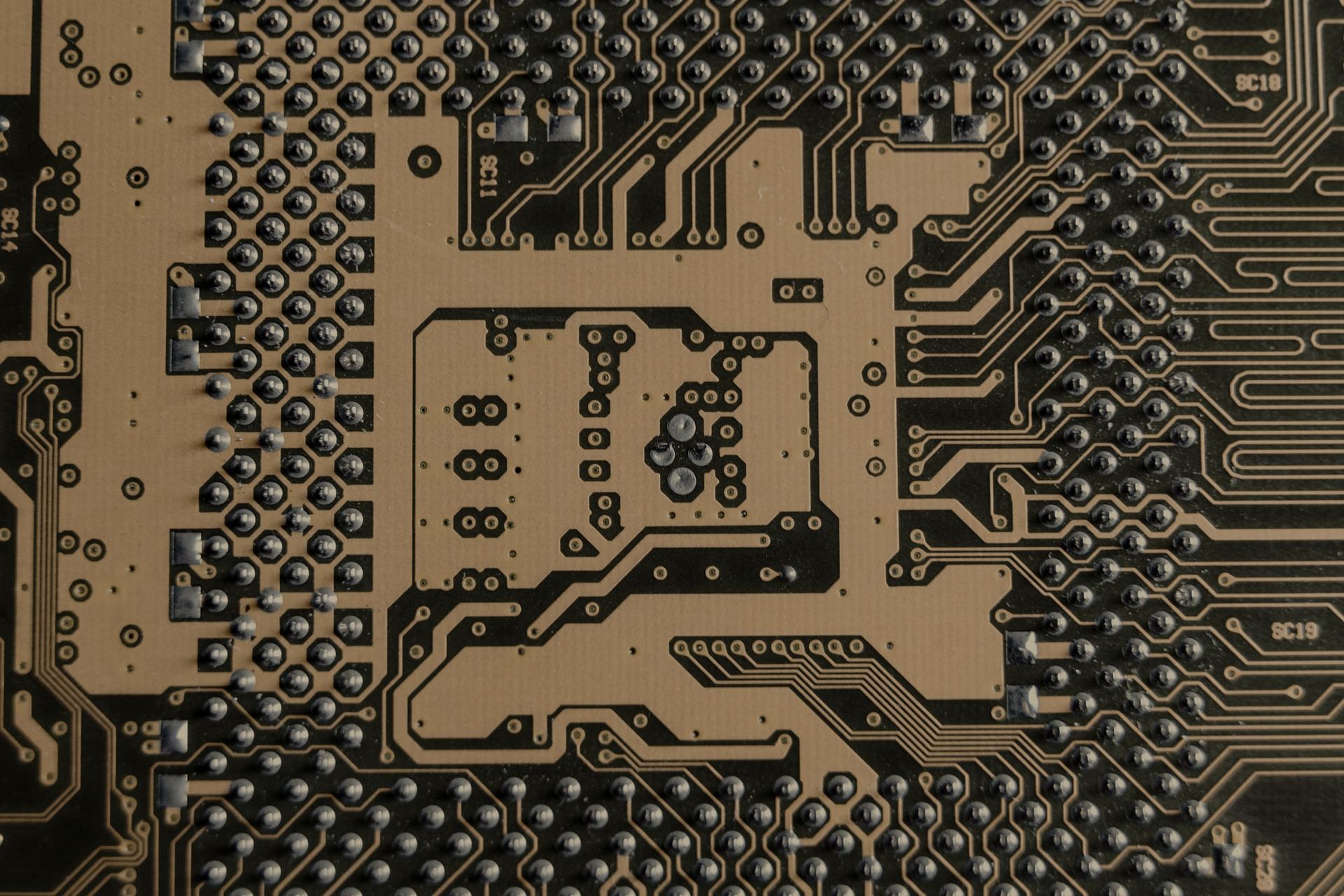
Geometry, not chemistry.
MetaTherm is a layered composite whose internal architecture creates the anisotropic conductivity tensor. The constituents are commodity-grade. The design lives in how they are arranged. The result is manufactured in two form factors today: drywall-format panels for building-envelope deployment, and sub-millimeter films for component- and package-level integration.
Both form factors derive from the same underlying physics. The building-scale product strips cooling load from the facility envelope before it ever reaches active equipment; the component-scale film steers heat away from sensitive die surfaces. The behavior is the same; only the dimension changes.
Strip cooling load from the building, not just the chip.
Today the cooling problem is treated chip-by-chip and rack-by-rack: close to the heat, expensive to operate, and indexed to the hardware generation. MetaTherm pushes the intervention up the stack. Anisotropy at the building envelope decouples the interior thermal load from the outdoor climate and from the hardware geometry. The active cooling system stops being a structural part of the facility's electrical bill and becomes a trim adjustment.
- 77% reductionin active cooling load · modeled projection against industry-average operation
- PUE 1.54 → 1.10industry-average to hyperscaler-class facility efficiency
- Hardware-agnosticindifferent to chip generation, vendor, or rack topology; the envelope does the work
- 20–30 year operating lifeno fluids, no compressors, no maintenance cycle · building-envelope lifecycle
- Commodity manufacturingdrywall-format panels and sub-millimeter films · cost-competitive with standard insulation at scale
Decouple compute from cooling.
The goal is a built environment in which compute density is no longer rate-limited by what can be pumped, blown, or evaporated. Heat becomes an architectural property of the facility: managed by the envelope, stable for the operating life of the building, and indifferent to the hardware running inside it.
The thermal semiconductor is the substrate for that future. Passive where today's systems are active. Solid-state where today's systems are mechanical. Building-scale where today's systems are component-scale.